
“2025 has been a year of significant progress for ProCredit Bank Albania, marked by solid growth in financing and deposits alongside major investments in technology and digital innovation.”
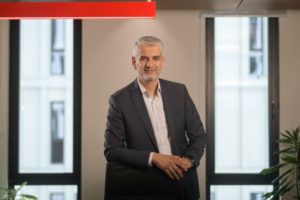 FIAA: ProCredit Bank’s performance and strategic priorities
ProCredit Bank has had an important year in 2025, including the launch of new SME financing schemes. How would you describe the bank’s overall performance this year, and what strategic priorities, particularly in digitalization, automation, and sustainable financing, are guiding you into 2026?
Mr. Haliti: 2025 has been a year of significant progress for ProCredit Bank Albania. We achieved solid growth in both financing and deposits while maintaining a disciplined approach to risk and liquidity. At the same time, we made substantial investments to strengthen our foundation for the future. Technology was a key priority, with upgrades to existing digital platforms and the introduction of new solutions such as Apple Pay—where we were the first bank in Albania to offer this convenient payment option—alongside preparations for additional digital services designed to further enhance the client experience.
Beyond technology, we invested in expanding and modernizing our branch network and advisory centers to deliver better guidance and improve overall client interaction. We also grew our team considerably to support business expansion and service quality. A major milestone was the move to our new Head Office, a modern workspace designed to foster collaboration and efficiency.
Another highlight was the launch of several financing programs in partnership with the EBRD, focused on supporting SMEs in areas such as energy efficiency, green investments, and digital transformation. These programs combine funding with incentives and technical assistance, helping businesses upgrade and remain competitive.
All these initiatives—and more—position us to deliver faster, safer, and more convenient banking for both individuals and businesses. Looking ahead, we will continue to build on this momentum with further digital innovations and sustainable financing solutions that enable SMEs to modernize and grow responsibly.
Supporting SMEs in a changing market
Given the evolving dynamics of Albanian SMEs, from rising costs to formalization and digital transformation, how do you assess the main challenges and opportunities for this segment, and how is ProCredit Bank positioning itself to support sustainable business growth?
SMEs are the core of our business – they represent the largest share of our loan portfolio and remain central to our strategy. Their success is vital for economic growth, and we see ourselves as a trusted partner in helping them achieve it.
The business environment is shifting quickly, with companies facing higher operating costs, stricter compliance requirements, and the need to embrace new technologies. These changes can be demanding, but they also create opportunities to improve efficiency and competitiveness. Our role is to make this transition easier. We provide clear, responsible financing and practical guidance that enable businesses to invest in modernization, strengthen their operations, and plan the future.
We also focus on simplifying banking through digital solutions and streamlined processes, saving time and reducing complexity so entrepreneurs can concentrate on what matters most—their business. By combining financial support with expertise and modern services, we help SMEs adapt with confidence and grow sustainably and with a forward-looking approach.
Banking sector resilience and innovation
How do you evaluate the resilience of the Albanian banking sector in 2025 amid shifting interest rates, regulatory changes, and growing demand for digital services? What innovations or service enhancements is ProCredit introducing to meet these expectations and strengthen the client’s experience?
The banking sector remained stable throughout 2025, supported by sound monetary policy and solid fundamentals, even as the pace of innovation accelerated. SEPA integration modernized payment systems, and at ProCredit Bank we introduced Apple Pay and a redesigned e-Banking platform to deliver a faster, more secure experience for clients.
Our transformation is ongoing, guided by an ambitious roadmap. In the coming months, we will launch a new mobile banking application offering a fully digital experience with enhanced functionality, speed, and security. Digital onboarding will allow clients to open new banking accounts entirely online, and a new digital loan origination system will make it possible to apply for small-ticket loans and receive funds without visiting a branch. We are also preparing to introduce a credit card with flexible features, and later, instant payments that will enable transactions to be processed in real time, 24/7.
These advancements are about more than technology; they are about making banking simpler, safer, and more efficient. At the same time, we continue to expand financing solutions that help businesses invest in energy efficiency and digital transformation. This combination of stability and innovation ensures we meet client expectations while supporting sustainable growth.
Leadership and institutional culture
In your leadership role at ProCredit Bank Albania, what principles guide you in building strong teams and cultivating a culture of responsibility, transparency, and long-term thinking within the organization?
For me, leadership is rooted in clarity, integrity, and responsibility. Decisions should be guided by principles rather than short-term gains, and they must inspire trust across the organization. I believe in creating an environment where people feel empowered to perform at their best, which starts with clear expectations, open communication, and ensuring that everyone understands the purpose behind our priorities.
Transparency and ethical conduct are essential, and teams are encouraged to think beyond immediate results and consider long-term impact. Continuous learning and merit-based development remain central, as competence and integrity form the foundation of sustainable success. Structured training, constructive feedback, and supportive leadership help build motivated, collaborative teams capable of delivering exceptional value.
The goal is to foster a culture where responsibility and sustainability guide decisions, and where innovation and client focus are balanced with prudence and professionalism. This approach strengthens the institution and ensures lasting value for clients and society.
Your role on the FIAA Board
As a member of the FIAA Board, how do you view the association’s role in strengthening dialogue with the government and improving the business climate, including the climate developing in the banking sector? Which issues do you consider most critical for foreign investors at this stage, especially for those operating in the banking sector?
FIAA plays an important role in shaping Albania’s business environment by fostering constructive dialogue between the private sector and the government. One of its greatest strengths is the openness of institutions to listen and engage, particularly when proposals come from international companies that bring global best practices and advanced standards. This collaborative approach helps accelerate reforms that strengthen competitiveness and align Albania more closely with European standards.
For foreign investors, priorities include ensuring fair competition, reinforcing the rule of law, and improving the efficiency of judicial processes. Significant progress has been made in these areas, and continued efforts will further enhance predictability and transparency—key factors for attracting investment and supporting Albania’s EU integration. Reducing bureaucracy and increasing formality in the economy are also welcomed steps toward creating a more business-friendly environment.
In banking specifically, addressing challenges such as the high level of cash transactions, improving the speed and effectiveness of court procedures, and resolving land ownership complexities will contribute to greater confidence and stability. These improvements, combined with broader institutional strengthening, will help businesses operate more efficiently and compete successfully in the European market. FIAA remains committed to supporting these objectives and serving as a constructive partner in Albania’s ongoing economic development.
Personal question: Your professional journey
You are a professional from Kosovo who has built a successful career in German banking and in Albania. What has motivated this cross-border journey, and how do you see your personal and professional contribution to the Albanian economy?
My professional journey began 25 years ago, working with international organizations before I joined ProCredit Bank in Kosovo. At that time, ProCredit was one of the first private banks in the country after the war, and its presence – alongside other international actors – played an important role in advancing Kosovo’s economy. I spent 15 years with ProCredit in Kosovo, during which the bank became a market leader and a key contributor to the development of the financial sector. Those years were formative for me. I attended numerous trainings, workshops, and business meetings in Frankfurt, where our Group is headquartered, which enabled me to bring German standards and best practices back home. These experiences helped introduce modern initiatives and innovations that strengthened competitiveness within the banking system.
In 2018, I moved to Albania with the motivation to share the experience I had gained over the years and contribute in a meaningful way. As part of a group operating across multiple countries, we continuously exchange knowledge and strive to bring innovations wherever we operate. Albania has great potential, and being part of its progress has been both rewarding and inspiring.
Banks are essential for economic development, and I feel fulfilled knowing that, through my role, I have made a modest contribution to strengthening the Albanian banking industry and supporting the country’s integration into European standards. It has been a journey of learning, sharing, and building—one that I truly enjoy and remain committed to. Looking ahead, I am optimistic about Albania’s future and will continue working to ensure that our banking practices promote competitiveness, transparency, and sustainable growth.