Author Archives Fiaa User

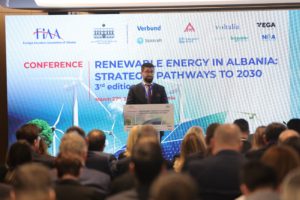
Mr. Balazs Revesz, Chairman of FIAA

February 23, 2026
/ / /
Comments Closed

“Predictability is the New Incentive: A Roadmap for Investor Confidence in Albania”
 

Monitor: What is the message that the government should take from the White Book?

Mr. Reveszs: The White Book 2025–2029 should be viewed by the government as a strategic partnership roadmap rather than a list of demands. The primary message is one of partnership and predictability, emphasizing the need for a collaborative roadmap to align Albania’s business climate with European Union standards. A draft response for a business magazine suggests focusing on three key pillars: predictability through consultation via a permanent mechanism, administrative consistency away from decentralized or ambiguous law administration, and alignment with the EU Growth Plan given that 98% of foreign investors are eager for EU integration benefits. The core message is that transparency and stability are crucial for attracting high-quality foreign direct investment.


The White Book refers to a decline in the perception of the business climate from the most recent Survey to 45 points from 49 a year ago. What are the main factors that are weakening investor confidence today and their expectations for the future?

According to the FIAA Business Environment Survey 2025, the perception of the business climate in Albania has decreased to 45 out of 100 points, down from 49 the previous year. Factors weakening investor confidence include macroeconomic volatility, rising corruption, labor market shortages, legislative instability, and administrative ambiguity.


Consultations with businesses have highlighted that frequent changes in fiscal legislation are one of the main concerns. Is the bigger problem the level of taxes or the lack of predictability? And is Albania losing investment due to this regulatory risk?

In our analysis and in ongoing conversations with FIAA members, it turns out that the lack of predictability is a much bigger challenge than the tax level itself. The biggest problem is precisely the unpredictability of changes and the lack of sufficient time and a regular process of public consultation with businesses and experts, before sending draft laws to parliament or approving sub-legal acts. This dynamic regulatory framework that is present does not provide sufficient predictability for foreign investors, who build their short- and medium-term budgets also on the basis of anticipated legal changes. And it also does not allow foreign investors affected by legal changes to be sufficiently heard and taken into consideration before their approval.

When the rules of the game change frequently and without prior and proper consultation, this creates high administrative costs and uncertainty in calculating the return on investment. For an investor, fiscal stability is worth more than a low but uncertain tax rate.

Regarding the loss of investments, we must be realistic that Regulatory Risk is an invisible tax. Albania is not only losing potential investments that choose other countries in the region with more stable legislation, but also risks the lack of expansion by existing investors. For this reason, the White Paper 2025-2029 strongly urges the creation of a sustainable fiscal calendar and an institutional dialogue where the voice of business is heard before the changes enter into force, and not after they have become a fait accompli.


Another aspect that is brought to attention is the delay in VAT reimbursement. Do you see this as a technical administrative problem or as a systemic risk for capital investments, especially in export sectors?

VAT refunds should not be seen simply as an administrative process, but as a pillar of mutual trust between the state and business. While we recognize the positive steps that have been taken through the fiscalization and automation process, the delays that are still encountered remain a serious concern. In the White Book, we treat this not simply as a technical problem, but as a systemic barrier to investment. An efficient VAT refund system is vital for companies’ liquidity, especially at a time when global capital costs have increased, as well as to aid financial predictability as companies need to have certainty over their cash flow.
 

The year 2026 marks 10 years since the adoption of the justice reform and investors are evaluating the judiciary with caution. From the FIAA’s perspective, how has its performance and impact been and what needs to be further improved in order to increase investor confidence and security?

It is still too early to ascertain tangible results of the Reform. However, in this decade of the Justice Reform, FIAA remains a supporter of this process, considering it as the main prerequisite for a healthy market economy. We appreciate the fact that the new justice institutions are already functional and are giving clear signals for the increase of integrity in the system. However, from the investor’s perspective, ‘justice delayed is justice denied’. For us, the biggest challenge today remains the high backlog of files and the length of court proceedings for reviewing cases, especially those in the Administrative Court of Appeal that businesses encounter most frequently. For a business, waiting several years for a court decision means frozen capital, operational uncertainty and, in some cases, jeopardizing the existence of the investment.

In the White Book 2025-2029, we emphasize that to increase investor confidence, the reform must move into its operational efficiency phase. This includes Specializing judges in complex commercial and financial matters, to guarantee quality and predictable decisions, widely using digitalization in the judicial system to increase transparency and speed up procedures, and strengthening alternative dispute resolution mechanisms, such as arbitration and mediation, to ease the burden on the courts. Investor confidence is not built solely on the existence of good laws, but on the guarantee that in the event of a conflict, they will have access to a prompt, independent and professional judicial process. This remains the true test of the success of the reform in the years to come.


Informality and unfair competition also remain a point of discussion, and this at a time when the government will also implement fiscal peace. In your view, how does this approach affect the business environment? Are informal actors really being punished, or are regular businesses being penalized more? How should the control policy be reformatted?

Informality remains one of the most critical challenges for the business environment in Albania. In the FIAA’s view, regular businesses today feel a disproportionate burden. While informal actors often operate ‘under the radar’, transparent businesses are subject to frequent and detailed controls. This creates the feeling that the tax administration is focusing on where it is easiest to collect revenue, instead of expanding the taxpayer base by going after those who hide from the system. Without a real fight against unfair competition, serious investors will find it difficult to justify capital investments in a market where the price of a product or service is not determined by efficiency, but by tax avoidance.


How do labor problems affect the approach of current and potential investors?

This is one of the most urgent challenges we have addressed in the White Paper 2025–2029, as human capital is the engine of any investment.

Today, the first question a potential investor asks is no longer ‘how much is the tax?’, but ‘are there enough qualified people to do the job?’.

For current investors, this situation is increasing operating costs. They are facing a ‘war for talent’, where high staff turnover and wage increases often unaccompanied by productivity gains put pressure on business sustainability. For potential investors, especially in the technology, manufacturing and value-added services sectors, the lack of a sufficient ‘pool’ of employees may be the main reason not to choose Albania.

In the White Book, we propose a three-pronged approach: Education and Re-skilling, Facilitation of Procedures for Foreign Labor, and Incentives for Innovation. Our message is simple: Without an aggressive national strategy for talent and labor, we risk losing our competitive advantage as an investment destination.”


EU integration is expected to bring challenges as well as benefits. Which EU-related reform would have the greatest economic, not political, effect if implemented properly and would serve the investment climate?

If we had to single out a reform with the greatest direct economic impact, it is undoubtedly the Approximation of Legislation and Standards with the European Single Market, accompanied by the Strengthening of the Rule of Law in economic matters. Unlike political reforms, the implementation of EU standards in the economy has the effect of a ‘universal passport’ for businesses in Albania.

In the White Book, we see EU integration not as a destination, but as an instrument of modernization. The reform that would serve us most is the one that transforms our public administration from a ‘controller’ to a ‘facilitator’ of European standards. When the rules in Tirana are the same as those in Vienna or Rome, the perceived risk of investment decreases and foreign capital comes naturally.


How does the performance of the administration and other economic aspects related to infrastructure, logistics, and energy affect investor access?

For an investor, the efficiency of the administration and the quality of the infrastructure are not just conveniences, but direct factors in the cost of the final product. If the infrastructure or administration does not function at the pace of the market, the investor loses the competitive advantage. In the FIAA’s view, there are pillars that dictate the decision to stay or expand in Albania, which are those where the Administration is seen as a Partner and not as an Obstacle.

Investors appreciate the progress with the digitalization of services (e-Albania), but the challenge remains ‘human bureaucracy’. We seek an administration that has a service mentality, where deadlines are respected and where the interpretation of the law is uniform. Any delay in permits or licenses is an opportunity cost that discourages new capital.

In the White Book, we emphasize that Albania must stop identifying itself as a country with ‘cheap labor’ and start competing as a country with ‘efficient logistics and green energy’. This is the transformation that foreign investors expect.


What message do you have for investors who today view Albania with interest, but also with reservations? What are the most interesting areas that can develop activity in Albania?

My message to investors who are still in the observation phase is this: Albania is no longer a ‘peripheral market’, but an economy on the verge of full integration into the European family. The reservations are understandable in any emerging market, but the success story of many FIAA member companies shows that with the right partner and a long-term vision, the administrative challenges are surmountable.

We encourage investors to view the current reforms not as obstacles, but as ‘growing pains’ of a system that is being cleaned up and made more transparent. The White Book 2025–2029 is precisely our guarantee that the voice of investors is structured and is being heard at the highest decision-making levels.

As for areas of strategic interest, we see tremendous potential in areas such as Renewable Energy, Digital Technology and Services (ICT), Sustainable Tourism and Agribusiness, Logistics and Transport.

Our invitation is: Come and be part of the transformation. The Albania of 2030 is being built today, and those who invest now will be the main beneficiaries of convergence with the European market.

Read More

FIAA elects the New Chairman of the Energy Industry Council

January 30, 2026
/ /
in News
/
Comments Closed

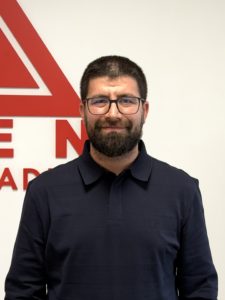
FIAA is pleased to announce that following its regular meeting, the Energy Industry Council has elected Mr. Ibrahim Halil Kilic, as its new Chairman.

On January 29th, FIAA’s Energy Industry Council members convened to discuss on the recent concerns and challenges facing the energy sector in Albania and the new energy law package. Part of the agenda was also the appointment of a new Chairman of the Council, who will be succeeding former chairman Mr. Silvio Pedrazzi, who has transitioned to another sector.

The present members in the meeting, unanimously agreed to appoint as chairman of the council Mr. Ibrahim Halil Kilic, Head of Trading at AYEN ENERGY TRADING sh.a, is a longstanding FIAA member. His leadership comes at a pivotal time, as Albania advances its National Energy Strategy, completes the tasks and obligations towards the Energy Secretariat, as well as works for the harmonization of the Renewable Energy Law with the EU.

The new Chairman, Mr. Kilic welcomed this new engagement within FIAA and is looking forward to contribute and guide the Council in the upcoming term, committing to provide expertise and support in addressing industry challenges, while continuing active consultations with the Albanian government.

AYEN Energy Trading SH.A. is one of the trading arms of the Ayen Enerji Group and operates in Albania as one of the leading electricity trading companies in the market. The company is active across wholesale and retail electricity trading and acts as a market access provider and off-taker. It is actively trading electricity and cross-border transmission capacity on all Albanian borders, working closely with both local and international partners.


Read More

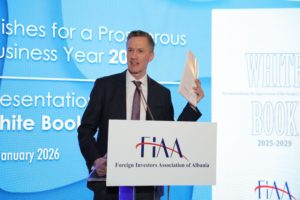
FIAA Hosts the Annual Traditional Wishes For a Prosperous Business Year and Presents the White Book 2025-2029

January 29, 2026
/ /
in News
/
Comments Closed

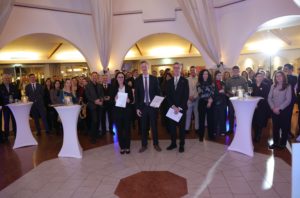
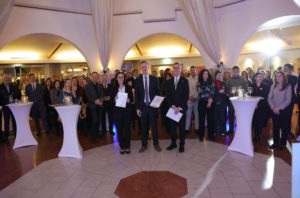
The Foreign Investors Association of Albania (FIAA) held its annual traditional wishes event for the new year, welcoming members, government officials, international institutions, the business community, and the diplomatic corps. The gathering served as a moment of reflection on the past year and a forward-looking dialogue on Albania’s economic future.

Read More

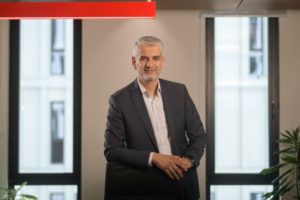
Mr. Mirsad Haliti, CEO at ProCredit Bank Albania

December 16, 2025
/ / /
Comments Closed

“2025 has been a year of significant progress for ProCredit Bank Albania, marked by solid growth in financing and deposits alongside major investments in technology and digital innovation.”

FIAA: ProCredit Bank’s performance and strategic priorities

ProCredit Bank has had an important year in 2025, including the launch of new SME financing schemes. How would you describe the bank’s overall performance this year, and what strategic priorities, particularly in digitalization, automation, and sustainable financing, are guiding you into 2026?


Mr. Haliti: 2025 has been a year of significant progress for ProCredit Bank Albania. We achieved solid growth in both financing and deposits while maintaining a disciplined approach to risk and liquidity. At the same time, we made substantial investments to strengthen our foundation for the future. Technology was a key priority, with upgrades to existing digital platforms and the introduction of new solutions such as Apple Pay—where we were the first bank in Albania to offer this convenient payment option—alongside preparations for additional digital services designed to further enhance the client experience.

Beyond technology, we invested in expanding and modernizing our branch network and advisory centers to deliver better guidance and improve overall client interaction. We also grew our team considerably to support business expansion and service quality. A major milestone was the move to our new Head Office, a modern workspace designed to foster collaboration and efficiency.

Another highlight was the launch of several financing programs in partnership with the EBRD, focused on supporting SMEs in areas such as energy efficiency, green investments, and digital transformation. These programs combine funding with incentives and technical assistance, helping businesses upgrade and remain competitive.

All these initiatives—and more—position us to deliver faster, safer, and more convenient banking for both individuals and businesses. Looking ahead, we will continue to build on this momentum with further digital innovations and sustainable financing solutions that enable SMEs to modernize and grow responsibly.


Supporting SMEs in a changing market

Given the evolving dynamics of Albanian SMEs, from rising costs to formalization and digital transformation, how do you assess the main challenges and opportunities for this segment, and how is ProCredit Bank positioning itself to support sustainable business growth?


SMEs are the core of our business – they represent the largest share of our loan portfolio and remain central to our strategy. Their success is vital for economic growth, and we see ourselves as a trusted partner in helping them achieve it.

The business environment is shifting quickly, with companies facing higher operating costs, stricter compliance requirements, and the need to embrace new technologies. These changes can be demanding, but they also create opportunities to improve efficiency and competitiveness. Our role is to make this transition easier. We provide clear, responsible financing and practical guidance that enable businesses to invest in modernization, strengthen their operations, and plan the future.

We also focus on simplifying banking through digital solutions and streamlined processes, saving time and reducing complexity so entrepreneurs can concentrate on what matters most—their business. By combining financial support with expertise and modern services, we help SMEs adapt with confidence and grow sustainably and with a forward-looking approach.


Banking sector resilience and innovation

How do you evaluate the resilience of the Albanian banking sector in 2025 amid shifting interest rates, regulatory changes, and growing demand for digital services? What innovations or service enhancements is ProCredit introducing to meet these expectations and strengthen the client’s experience?


The banking sector remained stable throughout 2025, supported by sound monetary policy and solid fundamentals, even as the pace of innovation accelerated. SEPA integration modernized payment systems, and at ProCredit Bank we introduced Apple Pay and a redesigned e-Banking platform to deliver a faster, more secure experience for clients.

Our transformation is ongoing, guided by an ambitious roadmap. In the coming months, we will launch a new mobile banking application offering a fully digital experience with enhanced functionality, speed, and security. Digital onboarding will allow clients to open new banking accounts entirely online, and a new digital loan origination system will make it possible to apply for small-ticket loans and receive funds without visiting a branch. We are also preparing to introduce a credit card with flexible features, and later, instant payments that will enable transactions to be processed in real time, 24/7.

These advancements are about more than technology; they are about making banking simpler, safer, and more efficient. At the same time, we continue to expand financing solutions that help businesses invest in energy efficiency and digital transformation. This combination of stability and innovation ensures we meet client expectations while supporting sustainable growth.


Leadership and institutional culture

In your leadership role at ProCredit Bank Albania, what principles guide you in building strong teams and cultivating a culture of responsibility, transparency, and long-term thinking within the organization?


For me, leadership is rooted in clarity, integrity, and responsibility. Decisions should be guided by principles rather than short-term gains, and they must inspire trust across the organization. I believe in creating an environment where people feel empowered to perform at their best, which starts with clear expectations, open communication, and ensuring that everyone understands the purpose behind our priorities.

Transparency and ethical conduct are essential, and teams are encouraged to think beyond immediate results and consider long-term impact. Continuous learning and merit-based development remain central, as competence and integrity form the foundation of sustainable success. Structured training, constructive feedback, and supportive leadership help build motivated, collaborative teams capable of delivering exceptional value.

The goal is to foster a culture where responsibility and sustainability guide decisions, and where innovation and client focus are balanced with prudence and professionalism. This approach strengthens the institution and ensures lasting value for clients and society.


Your role on the FIAA Board

As a member of the FIAA Board, how do you view the association’s role in strengthening dialogue with the government and improving the business climate, including the climate developing in the banking sector? Which issues do you consider most critical for foreign investors at this stage, especially for those operating in the banking sector?


FIAA plays an important role in shaping Albania’s business environment by fostering constructive dialogue between the private sector and the government. One of its greatest strengths is the openness of institutions to listen and engage, particularly when proposals come from international companies that bring global best practices and advanced standards. This collaborative approach helps accelerate reforms that strengthen competitiveness and align Albania more closely with European standards.

For foreign investors, priorities include ensuring fair competition, reinforcing the rule of law, and improving the efficiency of judicial processes. Significant progress has been made in these areas, and continued efforts will further enhance predictability and transparency—key factors for attracting investment and supporting Albania’s EU integration. Reducing bureaucracy and increasing formality in the economy are also welcomed steps toward creating a more business-friendly environment.

In banking specifically, addressing challenges such as the high level of cash transactions, improving the speed and effectiveness of court procedures, and resolving land ownership complexities will contribute to greater confidence and stability. These improvements, combined with broader institutional strengthening, will help businesses operate more efficiently and compete successfully in the European market. FIAA remains committed to supporting these objectives and serving as a constructive partner in Albania’s ongoing economic development.


Personal question: Your professional journey

You are a professional from Kosovo who has built a successful career in German banking and in Albania. What has motivated this cross-border journey, and how do you see your personal and professional contribution to the Albanian economy?


My professional journey began 25 years ago, working with international organizations before I joined ProCredit Bank in Kosovo. At that time, ProCredit was one of the first private banks in the country after the war, and its presence – alongside other international actors – played an important role in advancing Kosovo’s economy. I spent 15 years with ProCredit in Kosovo, during which the bank became a market leader and a key contributor to the development of the financial sector. Those years were formative for me. I attended numerous trainings, workshops, and business meetings in Frankfurt, where our Group is headquartered, which enabled me to bring German standards and best practices back home. These experiences helped introduce modern initiatives and innovations that strengthened competitiveness within the banking system.

In 2018, I moved to Albania with the motivation to share the experience I had gained over the years and contribute in a meaningful way. As part of a group operating across multiple countries, we continuously exchange knowledge and strive to bring innovations wherever we operate. Albania has great potential, and being part of its progress has been both rewarding and inspiring.

Banks are essential for economic development, and I feel fulfilled knowing that, through my role, I have made a modest contribution to strengthening the Albanian banking industry and supporting the country’s integration into European standards. It has been a journey of learning, sharing, and building—one that I truly enjoy and remain committed to. Looking ahead, I am optimistic about Albania’s future and will continue working to ensure that our banking practices promote competitiveness, transparency, and sustainable growth.

Read More

Ongoing Consultation for the White Book 2025–2029

November 27, 2025
/ /
in News
/
Comments Closed

In the framework of preparing the White Book 2025–2029, FIAA’s dedicated working committee of experts has been actively engaged in providing specific feedback on all relevant laws and regulations that directly influence the improvement of Albania’s business climate.

Read More

Roundtable Discussion on the Policy Study “Defining target groups and promotional measures to attract FDI to Albania”

November 10, 2025
/ /
in News
/
Comments Closed

On 6th November, the German Economic Team (GET), in collaboration with the Foreign Investors Association of Albania (FIAA), convened a roundtable to present and discuss the policy study titled “Defining Target Groups and Promotional Measures to Attract FDI to Albania.” The event brought together foreign investors operating in Albania, senior representatives from Albanian ministries, embassies, international donors, and institutional stakeholders.

Read More

EITI Team Meets FIAA Members in the MSG

October 31, 2025
/ /
in News
/
Comments Closed

By the end of October, the EITI team during their regular visit in Tirana met with government, industry and civil society representatives as part of Albania’s ongoing Validation. Consultations focused on discussing progress on stakeholder engagement, outcomes and impact, and transparency and how EITI implementation can further align with Albania’s national priorities. Discussions also explored how available systematic disclosures can support EITI reporting.

Read More

“A New Investment Frontier” – EU–Western Balkans 6 Investment Forum

October 14, 2025
/ /
in News
/
Comments Closed

A New Investment Frontier” this is how was called the last two days’ EU–Western Balkans 6 Investment Forum organized by the European Commission in Tirana during 13 -14 October 2025.  FIAA was privileged to have been invited by the European Commission to have a close discussion with Mrs Outi Slotboom, Director Supply Chains and Business Analysis, DG GROW, European Commission.


Read More

FIAA’s 25th Anniversary Gala – A Night to Remember

October 3, 2025
/ /
in News
/
Comments Closed

The Foreign Investors Association of Albania (FIAA) marked the 25th anniversary of its founding with an exclusive Gala Event, a festive occasion that brought together leaders of nearly 100 member companies, foreign ambassadors accredited in Albania, senior representatives of the Albanian government, heads of business organizations, and many long-time friends of the Association.

The evening opened with warm greetings from Mr. Balazs Revesz, President of FIAA, who emphasized that while celebrating the Association’s history, the milestone also reflected Albania’s remarkable progress. Ms. Marinela Jazoj, FIAA’s Director, added a personal touch by sharing cherished memories from FIAA’s long and transformative journey.

Read More